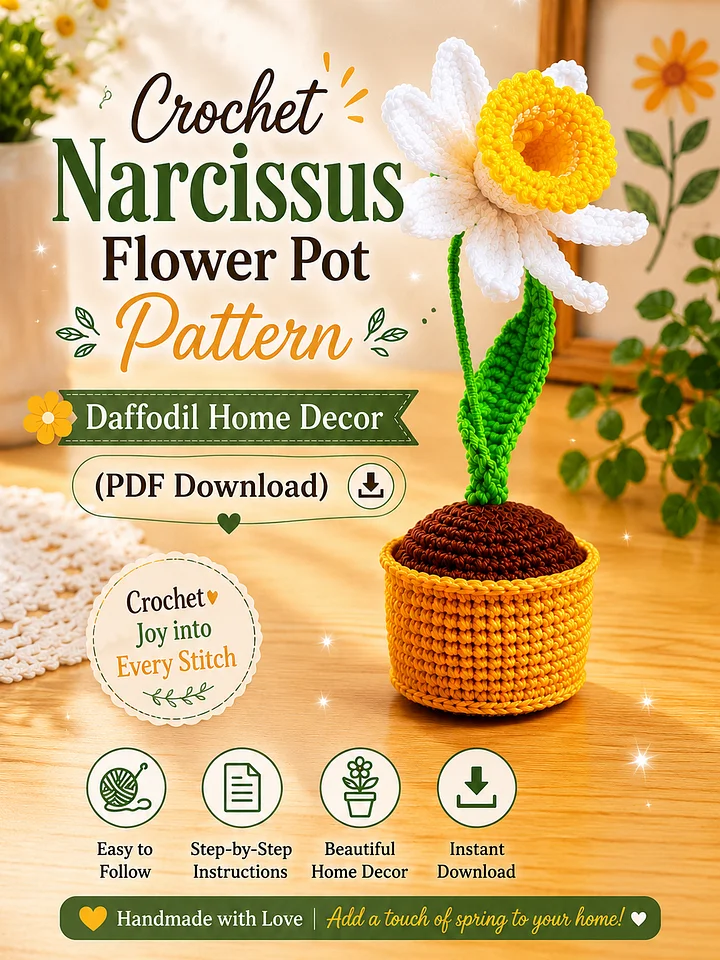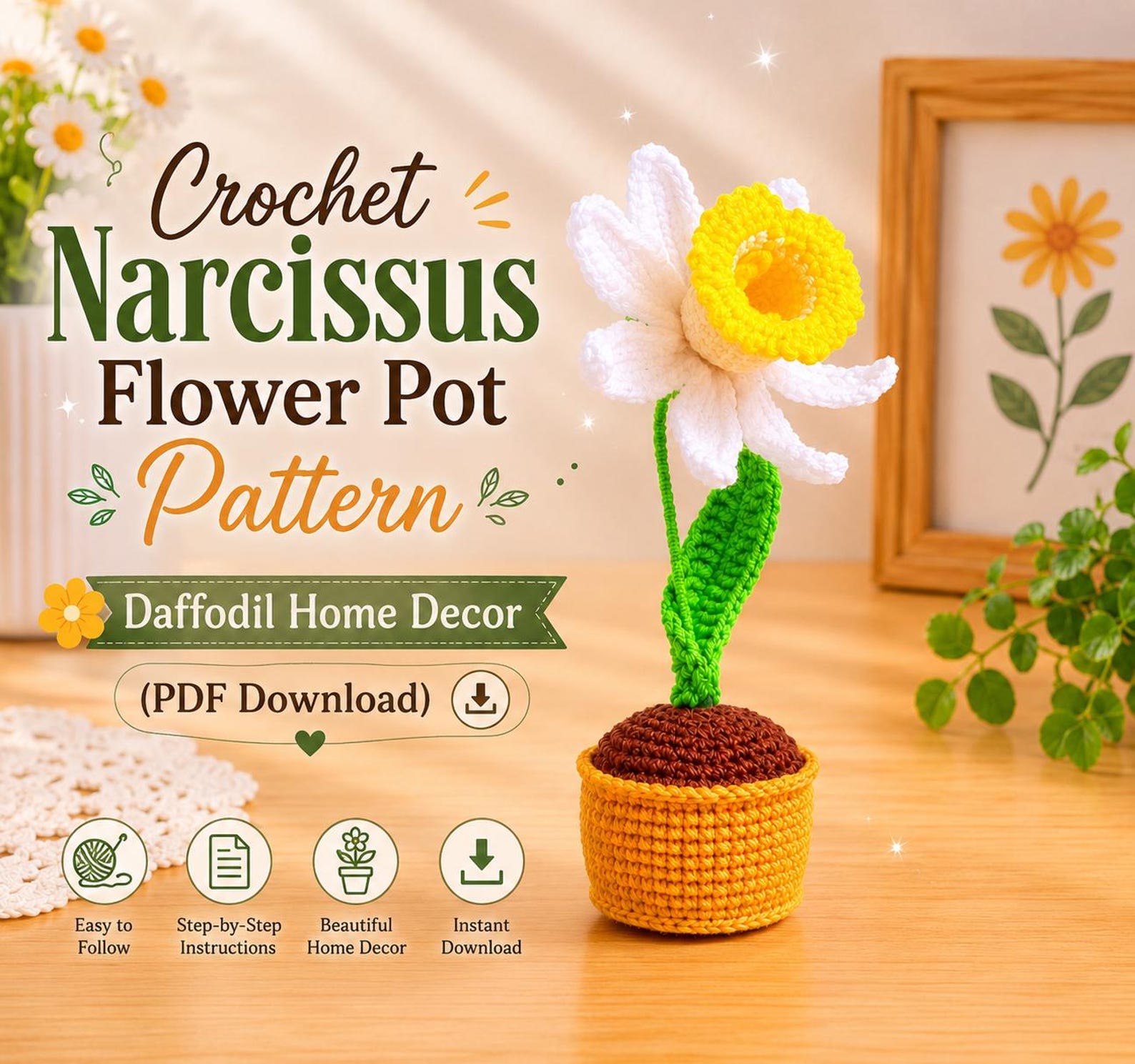
Crochet Narcissus Flower Pot Pattern: A Beginner-Friendly Guide to a Charming Spring Display
Quick Answer: The Crochet Narcissus Flower Pot Pattern combines realistic crochet narcissus (daffodil) flowers with a decorative crochet pot, creating a lasting spring-themed display. It's worked with worsted weight yarn and basic amigurumi techniques, making it approachable for beginners while still offering plenty of detail for more experienced crocheters.
Crochet Summary Box
| Difficulty | Beginner to Intermediate |
| Estimated Time | 2–5 hours |
| Finished Size | Approximately 5–8 inches (13–20 cm), depending on the design |
| Materials | Worsted weight yarn, crochet hook, polyester stuffing, floral wire (optional), yarn needle, stitch marker, scissors |
Table of Contents
- The Meaning Behind the Narcissus Flower
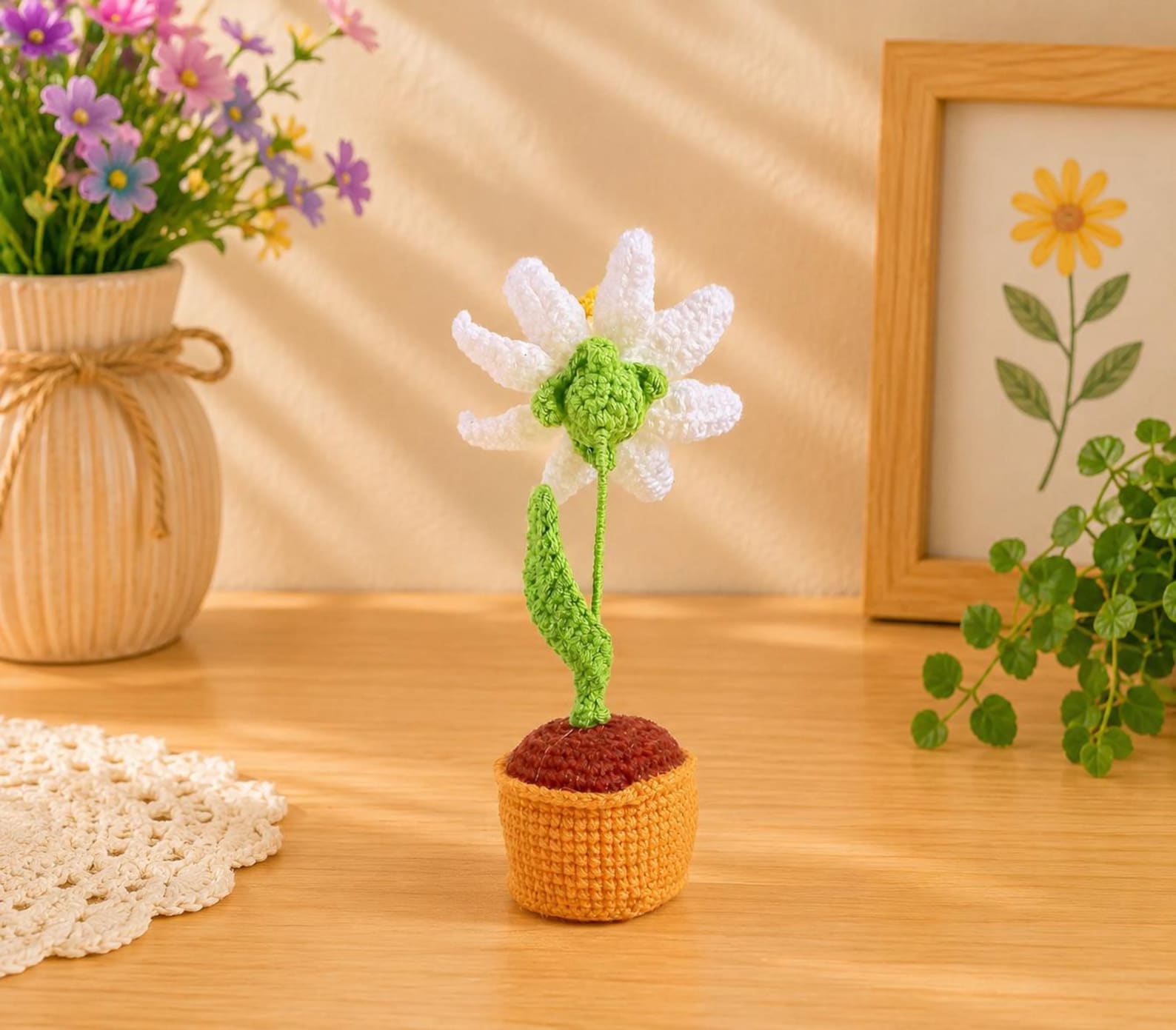
- What the Finished Project Looks Like
- Choosing Yarn and Hooks
- Stuffing and Pot Assembly
- Stem Construction and Floral Wire
- Leaf Shaping
- Finishing Techniques
- Color Variations and Customization
- Gift and Display Ideas
- Common Beginner Mistakes
- Care Instructions
- FAQ
The Meaning Behind the Narcissus Flower
The narcissus, also known as the daffodil, is one of the most beloved symbols of spring. It represents renewal, hope, happiness, and the arrival of brighter days after winter. Its cheerful trumpet-shaped center and bright petals have made it a favorite in gardens and floral arrangements for generations.
Because a crocheted narcissus never fades or wilts, it captures that same sense of renewal and hope all year long. It's a meaningful piece to display whenever you want a reminder of spring, whether that's the middle of a cold winter or a sunny June afternoon.
What the Finished Project Looks Like
This pattern brings together two elements: a set of realistic crochet narcissus flowers and a decorative crochet pot to display them in. The result is a charming, self-contained piece that looks just as at home on a bookshelf as it does on a coffee table, desk, or entryway console.
Because the pot and flowers are worked separately and then assembled, you can adjust the number of blooms, mix in different color variations, or arrange the stems at different heights for a fuller, more natural look.
Choosing Yarn and Hooks
Worsted weight (medium, US size 4) yarn is a good match for this project. It's easy to work with, widely available, and gives the petals and pot enough structure to hold their shape. Cotton yarn creates crisp, well-defined petals and a firm pot body, while acrylic yarn offers a soft feel and a wide range of bright spring colors, which suits narcissus flowers especially well.
A hook slightly smaller than the yarn label recommends is standard for amigurumi-style pieces like this. Sizing down helps keep stitches tight, which is especially important for the pot body and for petals that need to hold a defined shape.
Stuffing and Pot Assembly
Polyester fiberfill is the most practical stuffing choice for the pot base. Firm, even stuffing helps the pot sit flat and hold its shape, which is important since the finished piece needs to support the weight of the flowers and stems.
Working the pot in a continuous spiral, rather than joined rounds, gives the smoothest possible finish and avoids a visible seam line running up the side. Some crocheters also like adding a flat cardboard or plastic disc to the base of the pot for extra stability, especially if the piece will be moved or displayed on an uneven surface.
Stem Construction and Floral Wire
Stems are typically worked as narrow crocheted tubes, either stuffed lightly or reinforced with floral wire down the center. Floral wire gives the stems a natural, slightly bendable quality, which allows you to angle each flower differently within the pot for a more organic, less uniform look.
If you prefer a simpler build, stems can also be made without wire and left straight, which still gives a clean, tidy result. Wrapping the base of each stem with floral tape before inserting it into the pot helps keep everything secure and gives a neater finish where the stem meets the soil line.
Leaf Shaping
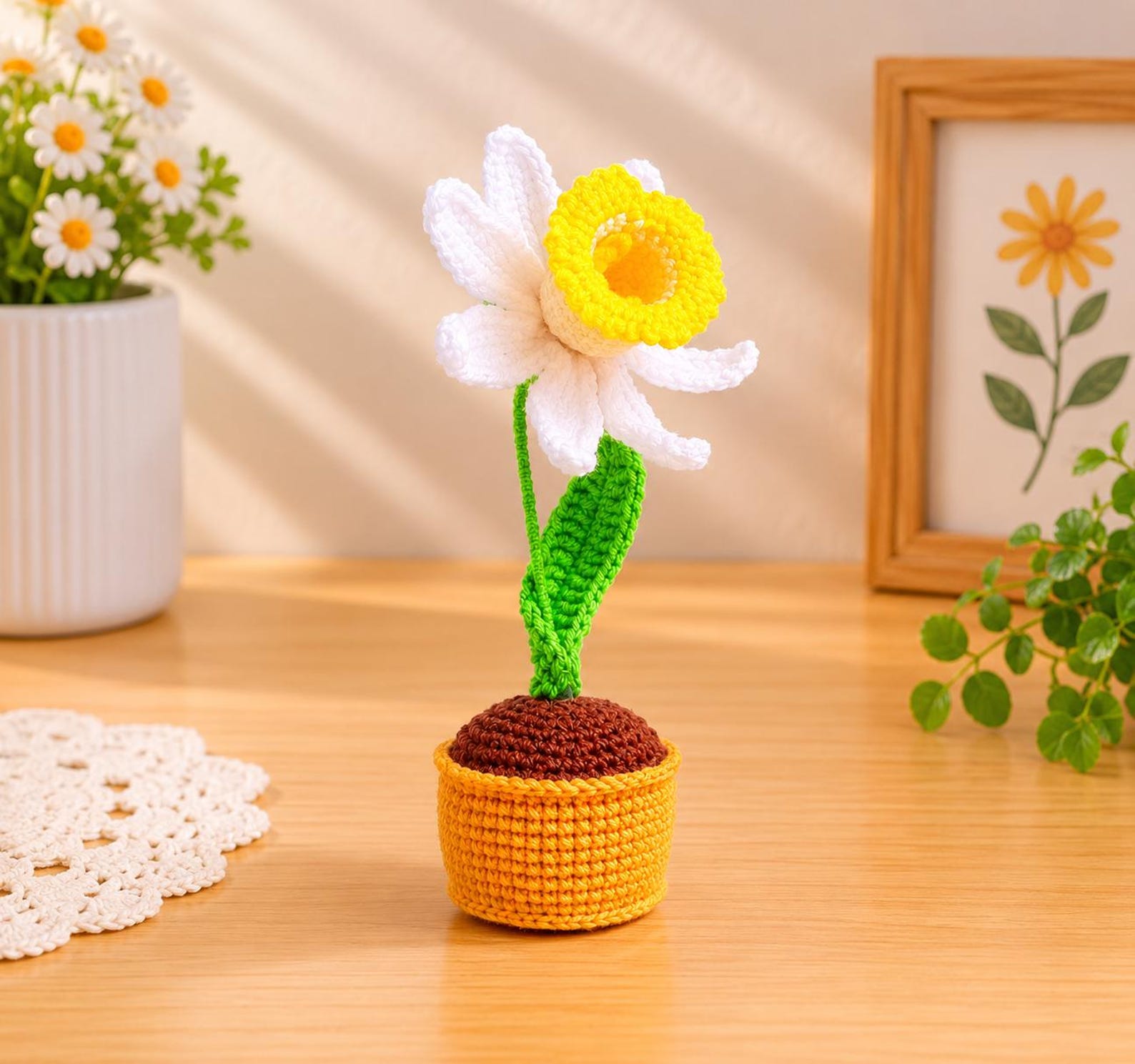
Narcissus leaves are long, slender, and slightly pointed, which translates well into crochet using narrow rows of single or half double crochet. A gentle curve worked into the leaf, rather than a completely flat shape, helps mimic the way real daffodil leaves arch outward from the base of the plant.
Leaves are usually made in a deeper green than the flower stems to add contrast and are typically attached near the base of the pot, tucked in among the flower stems for a fuller, more natural arrangement.
Finishing Techniques
Weaving in ends carefully is especially important on a piece with this many separate components, since loose threads on the pot, stems, or petals are easy to spot. Take time to secure each stem firmly into the pot, using a bit of stuffing or a dab of fabric glue at the base to keep everything in place.
Lightly steaming the petals and shaping them by hand while they cool can help each bloom hold a soft, open curve instead of lying flat. This small step makes a noticeable difference in how lifelike the finished flowers look.
Color Variations and Customization
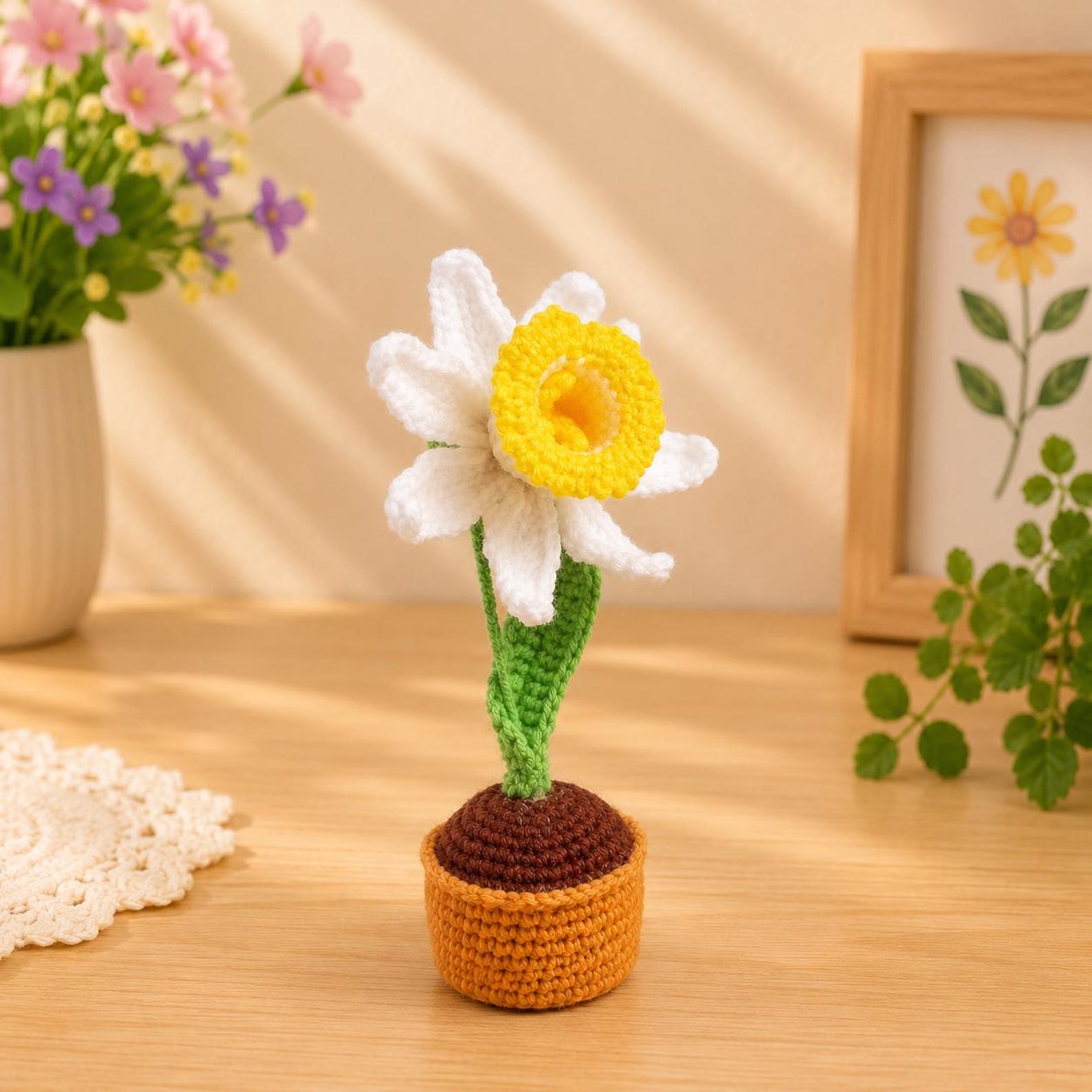
Classic narcissus flowers feature white or pale-yellow petals with a contrasting yellow or orange trumpet center, and this color combination translates beautifully into yarn. For a softer look, try pairing cream petals with a soft peach center. For a bolder, more saturated display, bright yellow petals with a deep orange trumpet make a cheerful statement piece.
The pot itself can also be customized to match your décor, whether that's a neutral terracotta shade, a soft pastel, or a pattern-matched color that ties in with the flowers. Mixing two or three color variations within the same pot creates a fuller, more natural-looking spring arrangement.
Gift and Display Ideas
A crochet narcissus flower pot makes a thoughtful gift for many occasions. Its spring symbolism makes it a natural fit for Mother's Day and Easter, while its lasting, low-maintenance nature makes it just as appropriate as a birthday present, housewarming gift, or handmade keepsake for someone who appreciates thoughtful, long-lasting décor.
Beyond gifting, this pot works well as everyday office décor, a desk accent, or even a wedding centerpiece for a spring-themed celebration. Because it never wilts, it can be reused as a keepsake reminder of the occasion long after the event is over.
If you enjoy floral crochet projects like this one, it's worth exploring the wider collection of crochet flower patterns for more seasonal ideas, or trying the crochet orchid flower pattern for an elegant addition to your handmade flower collection.
Common Beginner Mistakes
One common mistake is stuffing the pot too loosely, which can cause it to lose its shape once the stems and flowers are added. Firm, even stuffing throughout the pot base helps it stay sturdy and upright.
Skipping floral wire in the stems can also lead to flowers that flop over or lean unevenly, especially if the pot will be moved or displayed at an angle. If you want a natural, slightly varied arrangement, wire support makes a noticeable difference.
Rushing the leaf and stem placement is another easy mistake. Taking time to arrange stems at slightly different heights and tucking leaves in naturally, rather than placing everything in a perfectly even row, gives the finished piece a much more realistic, garden-like appearance.
Care Instructions
This finished piece requires very little upkeep, which is part of its charm. Light dusting with a soft, dry cloth keeps the petals and pot looking fresh. Avoid soaking the piece, especially if floral wire or stuffing has been used, since moisture can affect both the shape and the internal support.
Keeping the pot out of direct, prolonged sunlight helps prevent the yarn colors from fading over time. When not on display, storing it upright in a box or on a shelf, rather than pressed flat, helps the stems and petals keep their shape.
Frequently Asked Questions
Is the Crochet Narcissus Flower Pot Pattern good for beginners?
Yes. The techniques used are approachable for beginners, though a bit of prior amigurumi or shaping experience is helpful for the flower and leaf details.
Do I need floral wire for this pattern?
Floral wire is optional. It helps the stems hold a natural, slightly bent position, but the pattern can also be made with straight, stuffed stems for a simpler build.
What yarn weight works best for this project?
Worsted weight yarn is the most practical choice, offering good stitch definition for the petals along with enough structure for the pot body.
Can I change the flower and pot colors?
Yes. This pattern is very customizable, and adjusting the petal, center, and pot colors is one of the easiest ways to match the piece to your own home décor or a specific gift occasion.
Is this a good gift idea?
Definitely. Its spring symbolism and lasting nature make it a popular choice for Mother's Day, Easter, birthdays, housewarmings, and other thoughtful handmade gifts.
How long does this project take to complete?
Most crocheters finish the full flower pot, including flowers, stems, leaves, and pot assembly, in about 2 to 5 hours, depending on the number of blooms and personal crochet speed.
Get the Full Pattern
Ready to crochet your own spring display? 👉 Download the Crochet Narcissus Flower Pot Pattern from the CrochetDreamFiles Etsy shop and get the full printable PDF pattern.