
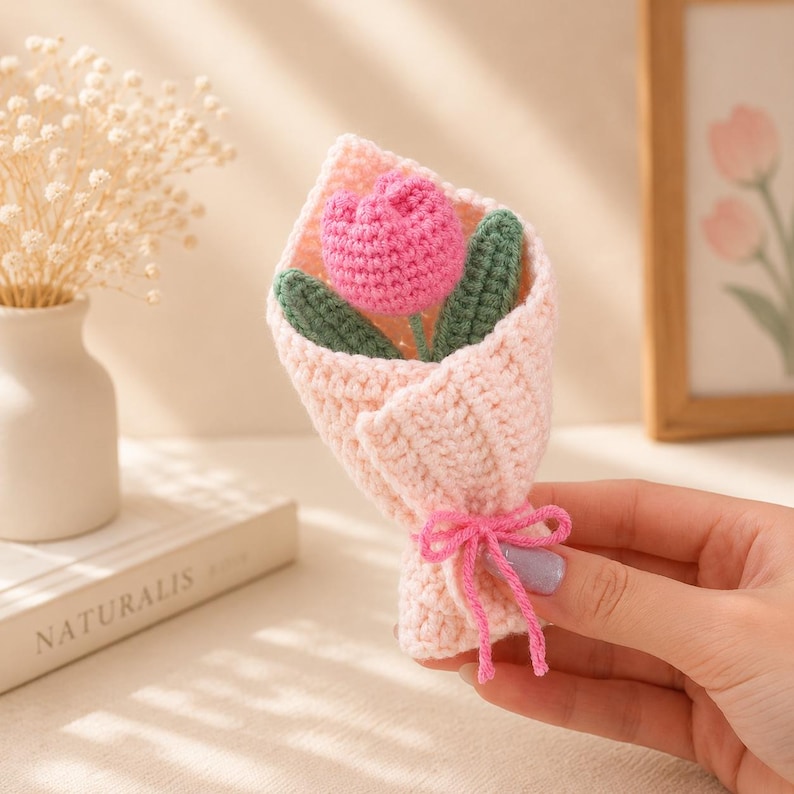
Tulip Bouquet Crochet Pattern: A Complete Guide
Quick answer: The Tulip Bouquet Crochet Pattern is a beginner-to-intermediate floral project that takes about 3–6 hours to complete, depending on bouquet size. Each tulip finishes at roughly 4–6 inches, and the bouquet can be customized in size, color, and stem count for seasonal décor or thoughtful handmade gifts.
Crochet Summary Box
| Difficulty | Beginner to Intermediate |
| Estimated Time | 3–6 hours |
| Finished Size | Customizable bouquet; individual flowers approximately 4–6 inches (10–15 cm) |
| Main Materials | Worsted-weight yarn (petal color of choice, green for stems/leaves), 3.5mm–4mm crochet hook, floral wire, green floral tape, yarn needle |
| Terminology | US crochet terms |
Table of Contents
- What Tulip Flowers Symbolize
- Why a Tulip Bouquet Makes a Meaningful Handmade Gift
- Choosing the Right Yarn and Hook
- Floral Wire and Stem Materials
- Finishing Techniques for the Cup-Shaped Petals
- Bouquet Arrangement Ideas
- Color Variations and Customization
- Common Beginner Mistakes to Avoid
- Care Instructions
- Practical Crochet Tips
- FAQ
What Tulip Flowers Symbolize
Tulips are one of the most recognizable signs of spring, and across many cultures they're associated with new beginnings, deep affection, and perfect love. Different colors carry their own meaning too: red tulips traditionally represent true love, yellow tulips suggest cheerfulness and sunshine, and purple tulips are often linked to royalty and admiration. That range of meaning makes a tulip bouquet a flexible gift that can be tailored to almost any sentiment simply by choosing a different petal color.
Because a crocheted tulip never wilts or drops its petals, it carries that symbolism forward in a lasting way. A bouquet given today can still be sitting on a windowsill years later, still saying exactly what it said the day it was given.
Why a Tulip Bouquet Makes a Meaningful Handmade Gift
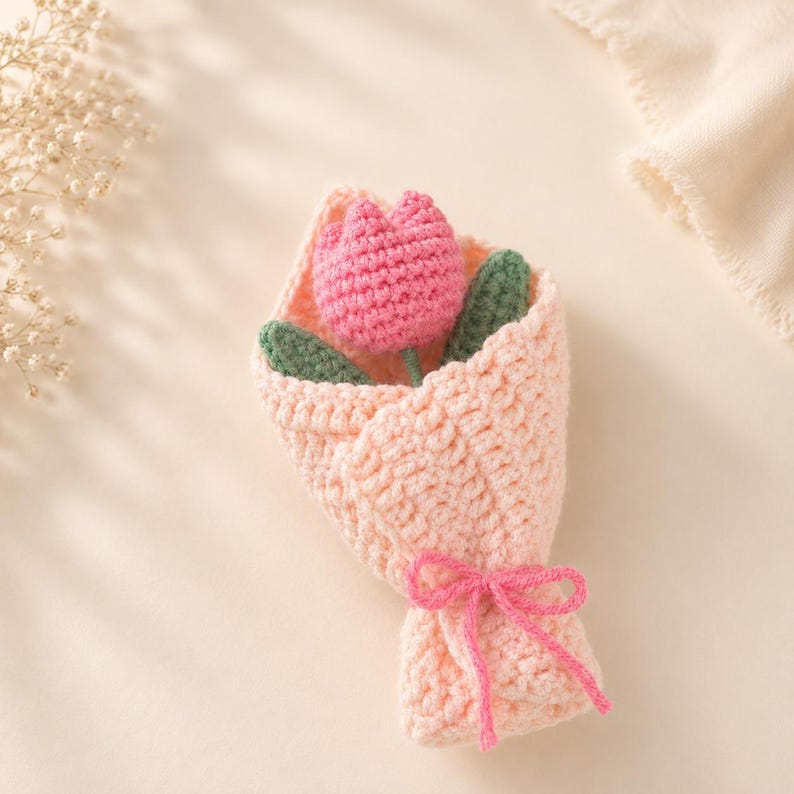
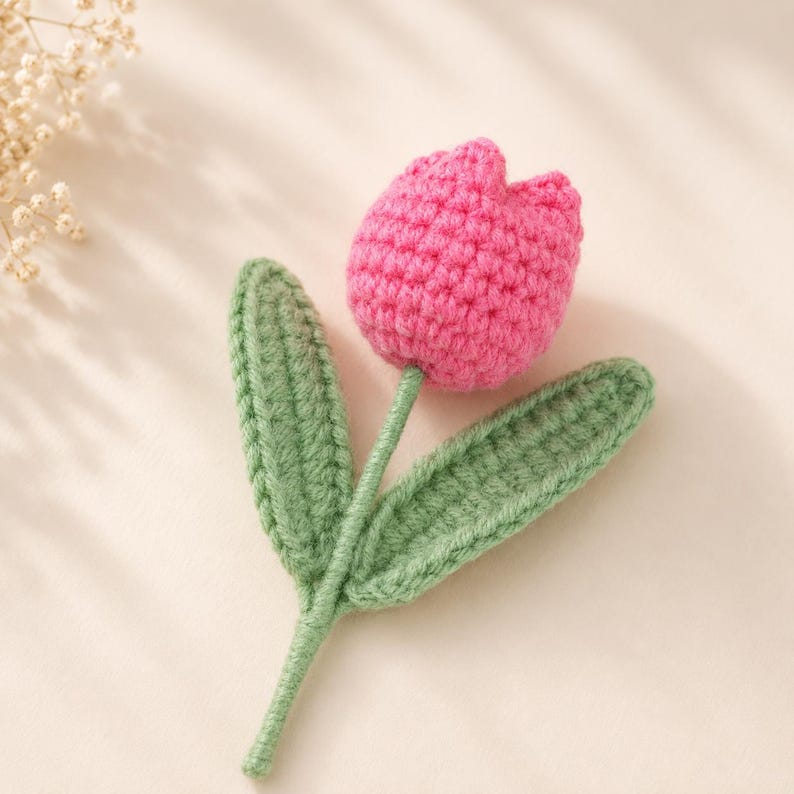
Tulips have a clean, simple silhouette that reads as fresh and modern, which makes this bouquet a natural fit for spring weddings, Mother's Day, birthdays, and housewarming gifts. Their cup-shaped petals also photograph beautifully, which is part of why tulip bouquets are such a popular choice for home décor and gifting.
A single wrapped stem makes a sweet, low-key gift, while a gathered bouquet of five or more stems becomes a colorful centerpiece or a memorable handmade gift for someone who appreciates flowers that last.
Choosing the Right Yarn and Hook
A smooth worsted-weight (US category 4) cotton or cotton-blend yarn gives tulip petals a clean, structured look, which matters since the cup shape relies on crisp stitch definition to hold its form. Acrylic yarn is a fine budget-friendly alternative as long as you choose a tightly spun, smooth variety rather than anything fuzzy or textured.
Tulips work in almost any color, so choose your petal yarn based on the mood or occasion you're going for, alongside a medium green for the stem and leaves. A 3.5mm to 4mm hook with worsted-weight yarn produces a fabric firm enough to hold the cup shape without collapsing inward.
Floral Wire and Stem Materials
Floral wire is what gives a crocheted tulip its upright, lifelike stem. Thread a medium-gauge floral wire through the crocheted stem tube before closing the seam, which lets the stem stand upright the way a real tulip does, rather than flopping over under the weight of the flower head.
Once the wire is in place, wrap the stem in green floral tape from just below the flower head down to the base. This hides the wire and seam, and the slightly tacky texture also helps several stems hold together naturally when gathered into a bouquet.
Finishing Techniques for the Cup-Shaped Petals
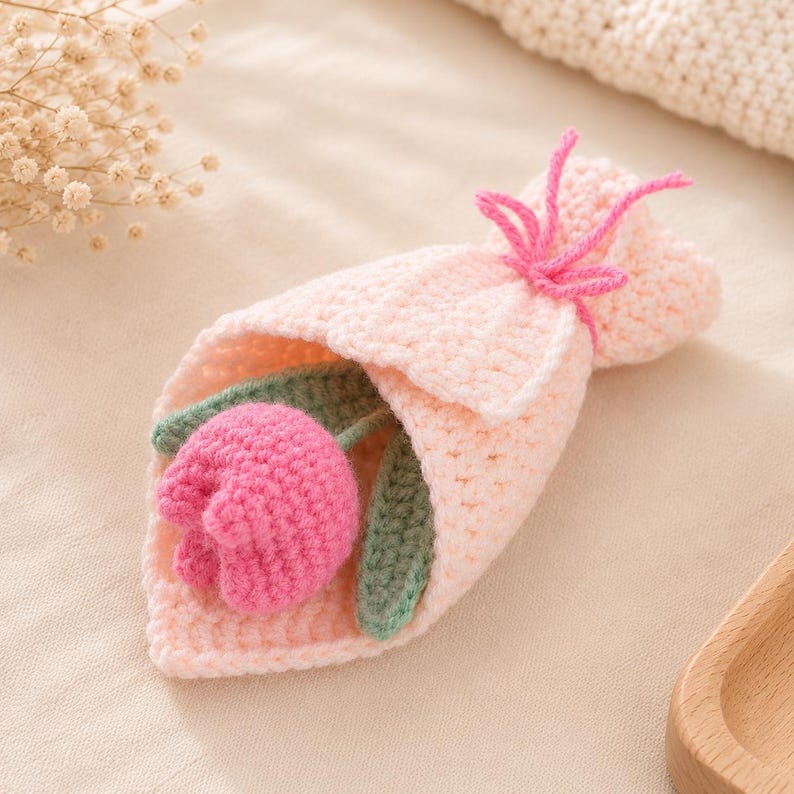
A tulip's signature look comes from its rounded, cup-like petal shape, which should curve inward slightly at the top rather than lying flat. When assembling, work each petal section with even tension so the cup holds its shape, and join the petals together with small, even stitches along the base so the seam stays hidden once the flower is attached to its stem.
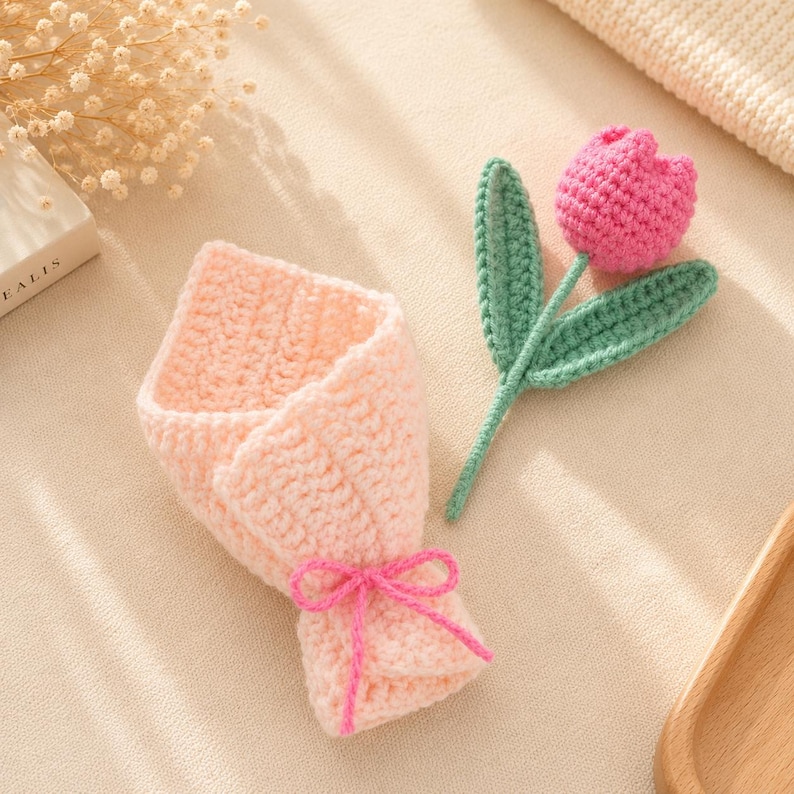
Attach the leaves a little below the flower head, angled slightly outward, which mirrors how real tulip leaves grow and gives the finished piece a more natural silhouette.
Bouquet Arrangement Ideas
A cluster of five to seven tulip stems in a mix of two or three colors creates a classic, garden-style bouquet, since real tulips are often sold and arranged in mixed-color bunches. Wrapping the gathered stems in kraft paper or soft fabric and tying with ribbon or twine finishes the bouquet for gifting or display.
For a fuller, more varied arrangement, tulips pair naturally with other spring florals. Adding a few stems from a crochet narcissus bouquet or a yellow daisy bouquet adds height and color contrast that a single-flower bouquet doesn't have on its own.
Color Variations and Customization
Tulips are one of the most adaptable flowers to crochet in terms of color, since real tulips themselves come in nearly every shade. Soft pink or pastel lavender petals suit a gentle nursery or spring palette, while bold red or deep purple petals make a richer, more dramatic statement bouquet.
You can also vary petal width slightly across a batch to mimic the natural variation seen in real tulip blooms, which makes a grouped bouquet look more organic rather than perfectly uniform.
Common Beginner Mistakes to Avoid
- Flattening the petal cup: if the petals are stitched too loosely or with uneven tension, the flower loses the rounded cup shape that defines a tulip.
- Uneven petal joining: take care that all petal sections are joined at an even height so the flower head doesn't lean to one side.
- Skipping the floral wire: without wire, stems won't stand upright the way a real tulip does.
- Loose floral tape wrapping: a loose wrap can let wire show through and unravels faster with handling.
Care Instructions
Dust finished tulips gently with a soft, dry cloth, or use a hairdryer on a cool, low setting held at a distance. The floral wire inside each stem means a bent stem can simply be reshaped back into position at any time. To keep colors looking their best, avoid displaying finished bouquets in direct, constant sunlight.
Practical Crochet Tips
- Crochet all petal sections for a multi-stem bouquet in the same sitting to help keep your tension consistent across every flower.
- Practice the cup-shaped petal join on a single test flower before committing to a full multi-stem bouquet.
- Lay your gathered stems out flat before tying the final bouquet so you can adjust height, color order, and angle while everything is still loose.
- If you'd like to build a larger seasonal arrangement, our crochet sunflower bouquet pattern adds a bold color contrast alongside tulips for a fuller, more textured bouquet.
Frequently Asked Questions
Do I need floral wire for this pattern?
Floral wire is recommended so the stems stand upright. Without it, the stems will be soft and won't hold a pose.
How many tulip stems make a full bouquet?
Five to seven stems creates a balanced, full-looking bouquet, though you can scale up or down depending on the size you want.
What occasions suit a tulip bouquet best?
Tulips work well for spring weddings, Mother's Day, birthdays, and housewarming gifts, with color choice letting you tailor the sentiment to the occasion.
Can I mix multiple colors in one bouquet?
Yes. A mixed-color bouquet of two or three tulip shades creates a classic, garden-style look that mirrors how fresh tulips are often arranged.
Can I combine tulips with other crochet flowers?
Yes. Tulips pair especially well with narcissus and daisies for a fuller, garden-style spring bouquet.
Is this pattern suitable for a true beginner?
The petals are approachable for beginners, though working with floral wire and assembling the cup shape makes this better suited to someone with at least some basic flower-crochet experience.
If you'd like the complete written pattern with full stitch-by-stitch instructions for the petals, leaves, and stem assembly, you can find it as a printable PDF on Etsy.