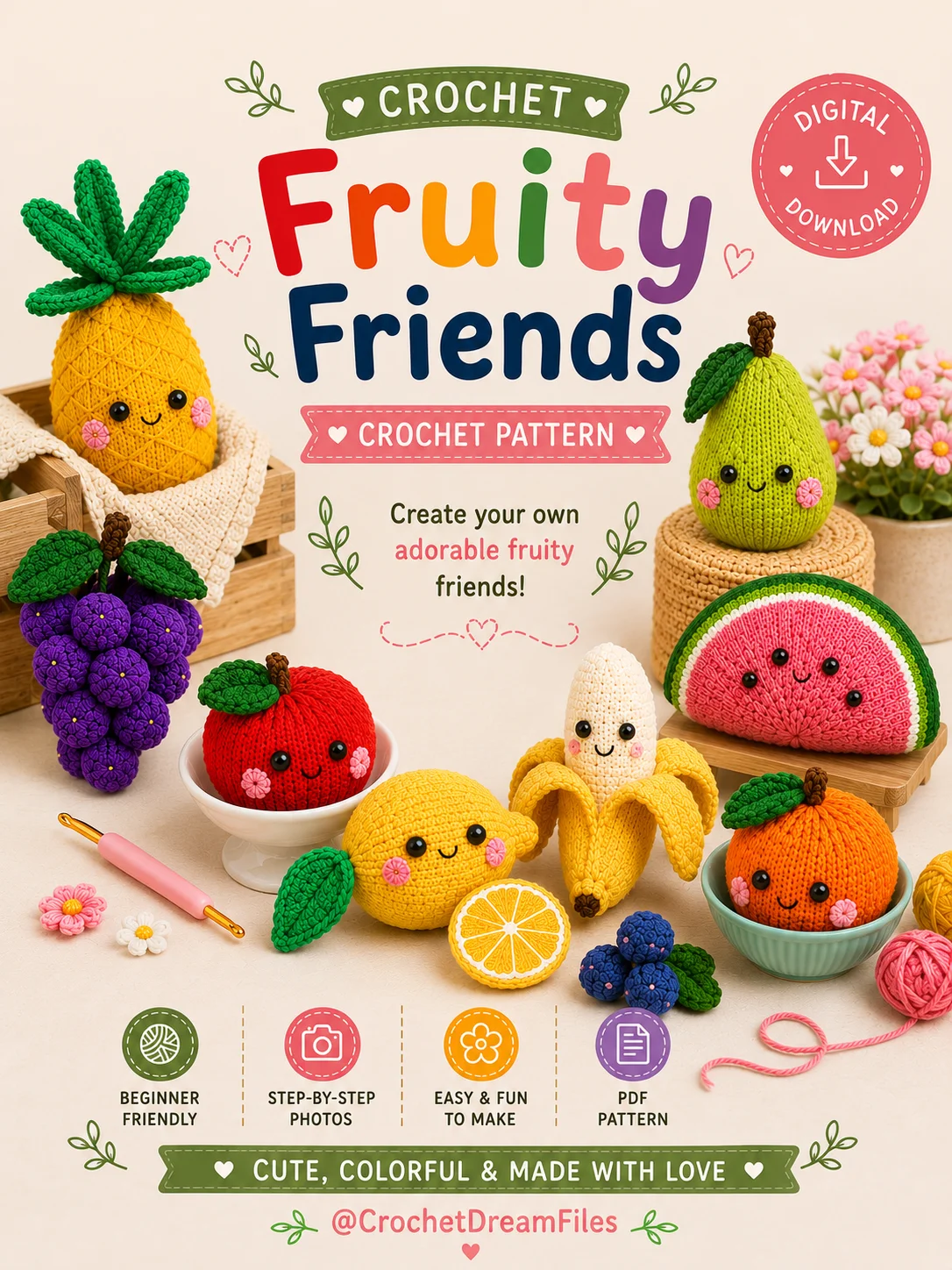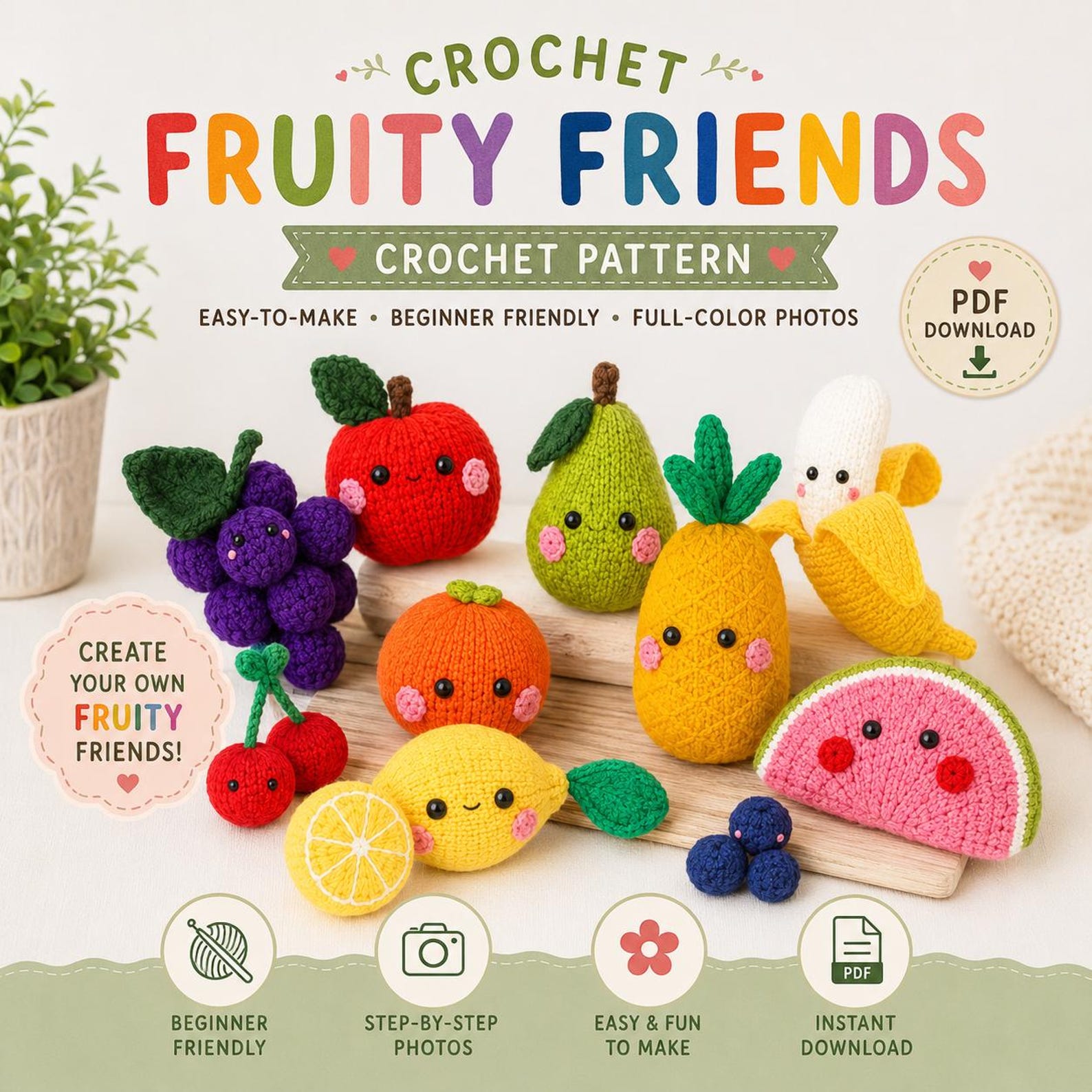
Crochet Fruity Friends Pattern: A Complete Beginner's Guide
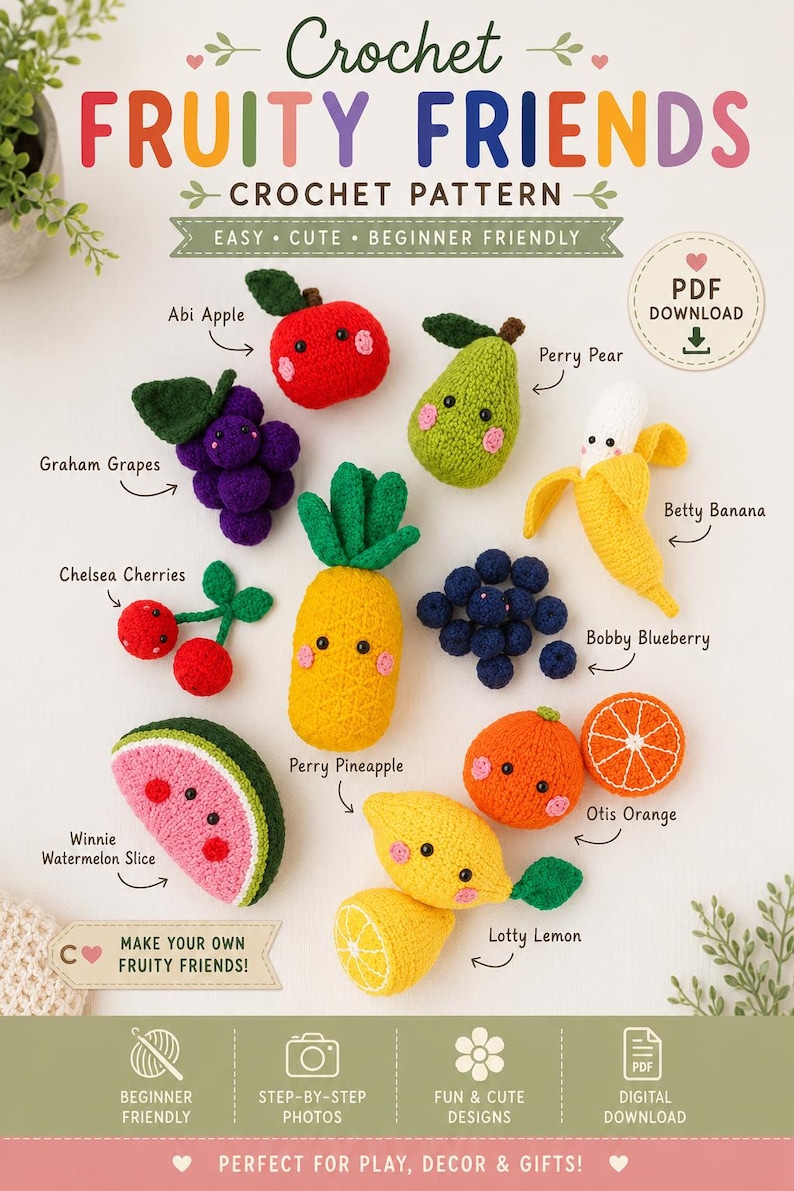
Quick answer: The Crochet Fruity Friends Pattern is a beginner-friendly collection of kawaii-style fruit amigurumi, each taking about 2–4 hours to complete and finishing at roughly 3–5 inches. The set uses simple rounded shapes and basic single crochet, making it an easy and fun project for building a whole fruit bowl of handmade characters.
Crochet Summary Box
| Difficulty | Beginner |
| Estimated Time | 2–4 hours (per fruit) |
| Finished Size | Approximately 3–5 inches (8–13 cm) per fruit |
| Main Materials | Worsted-weight yarn in fruit colors, 3.5mm–4mm crochet hook, polyester stuffing, embroidery floss, yarn needle |
| Terminology | US crochet terms |
Table of Contents
- Why a Fruity Friends Collection Makes Such a Fun Project
- Choosing the Right Yarn, Hook, and Stuffing
- Embroidery Details and Facial Features
- Finishing Techniques for a Clean, Professional Look
- Color Combinations and Customization Ideas
- Size Variations
- Seasonal Themes and Display Ideas
- Common Beginner Mistakes to Avoid
- Care Instructions
- Practical Crochet Tips
- FAQ
Why a Fruity Friends Collection Makes Such a Fun Project
There's something especially satisfying about working through a themed collection instead of a single project. The Fruity Friends pattern set lets you build a little fruit bowl one piece at a time, and each fruit is small enough to finish in a single sitting, which keeps momentum high if you're new to amigurumi.
These tiny fruit characters work well in almost any setting. They make charming keychains, cheerful desk ornaments, soft play food for toddlers, or a sweet decorative bowl for a kitchen counter. Because each fruit is simple and rounded, the whole set reads as cohesive even when made by a beginner, which makes it a confidence-building project as much as a decorative one.
The set also scales naturally with your interest. You can crochet just one or two fruits as a quick project, or work through the full collection over a few weeks to build a complete handmade fruit basket.
Choosing the Right Yarn, Hook, and Stuffing
A smooth worsted-weight (US category 4) cotton or cotton-blend yarn gives the cleanest, most polished look for these fruit shapes, since the rounded surfaces show off stitch definition clearly. Acrylic works too, but choose a tightly spun, smooth variety rather than anything fuzzy, since texture can blur the clean lines that make these fruits look crisp and kawaii.
A 3.5mm to 4mm hook paired with worsted-weight yarn produces a tight, even fabric that holds its shape and keeps stuffing from showing through the stitches. Since each fruit is small, a slightly tighter tension than usual will help maintain a neat, rounded silhouette.
Use polyester fiberfill for stuffing. It's washable, holds its shape over repeated handling, and is the standard safe choice for handmade toys and decor. Stuff in small pieces and check the shape as you go, since these small rounded forms can look lopsided quickly if stuffing is uneven.
Embroidery Details and Facial Features
The kawaii charm of the Fruity Friends collection comes largely from its faces. Simple embroidered features, like curved smile lines and small dot eyes in dark embroidery floss, give each fruit its personality without adding any extra crochet steps. A few stitches of pink or red yarn on the cheeks can add a soft blush that makes the character feel even friendlier.
If a piece will be handled by a young child, embroidered features are the safer choice over plastic safety eyes, since they have no small parts that could come loose with repeated handling. Take your time spacing the features evenly. A face that's slightly off-center is one of the quickest ways a finished piece can look unintentional rather than charming.
Finishing Techniques for a Clean, Professional Look
Weave in every yarn tail through several stitches in different directions so nothing works loose with regular handling, especially important for keychains and toys that will be carried around often. Before closing the final round, check that the stuffing is firm and the shape looks symmetrical, since small fruit shapes show unevenness more obviously than larger projects.
For fruits with stems or leaves, like strawberries or pineapples, attach these pieces with a few extra securing stitches rather than relying on a single point of contact. This small step makes a noticeable difference in how long the finished piece holds up to handling.
Color Combinations and Customization Ideas
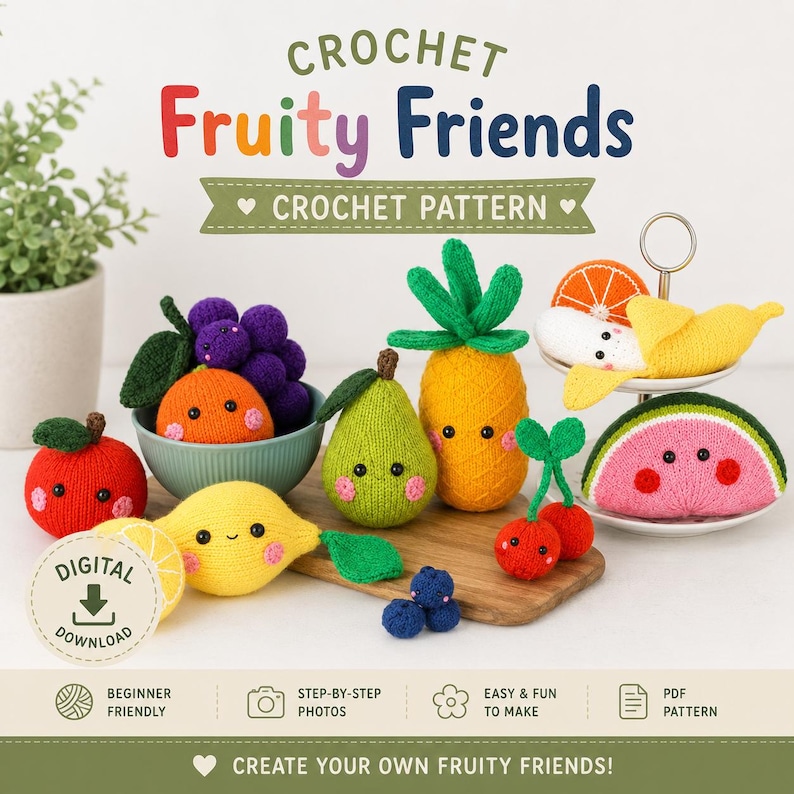
Since each fruit has a natural color palette, this collection is a great low-risk way to practice working with bright, saturated yarn colors. A red and green strawberry, an orange and yellow citrus slice, or a deep purple grape cluster all read instantly as their fruit without any extra detailing.
For customization, try pastel versions of each fruit for a softer nursery palette, or add small details like a tiny crocheted leaf, a felt sticker, or a contrasting stitch pattern on one section to make your set feel more personal. Mixing matte and slightly textured yarns within the same set can also add subtle visual interest without changing the pattern itself.
Size Variations
The collection's natural finished size of 3–5 inches per fruit is ideal for keychains, ornaments, and small decor pieces. For a larger plush version suited to soft toy play, switch to a bulky-weight yarn with a 5mm–5.5mm hook to scale the same shapes up. For miniature versions, like tiny charms for a bag or bracelet, a lighter DK-weight yarn with a 3mm hook will shrink the fruits down while keeping their proportions recognizable.
Seasonal Themes and Display Ideas
Fruit amigurumi naturally lend themselves to seasonal displays. A summer-themed arrangement might focus on watermelon and citrus pieces, while a cozy autumn display could highlight apple and pear shapes in warmer tones. For markets or craft fairs, grouping the fruits in a small basket or wooden bowl creates an appealing, ready-to-sell display that shows off the whole collection at once.
Common Beginner Mistakes to Avoid
- Inconsistent stitch tension between pieces: if you're making several fruits, try to crochet them in the same sitting or session so your tension stays consistent across the set.
- Overstuffing small pieces: because these shapes are small, overstuffing can distort the rounded silhouette. Stuff firmly but check the shape frequently.
- Skipping a stitch marker: with such small pieces, it's easy to lose track of where a round starts. A marker saves time and prevents miscounted rounds.
- Rushing facial embroidery: the face is what gives each fruit its character, so take the extra few minutes to embroider it carefully and evenly.
Care Instructions
Hand wash in cool water with a mild detergent, then reshape gently while damp and air dry flat. Avoid machine washing or drying, since the agitation can felt the yarn fibers and loosen embroidered details over time. For pieces used as keychains, occasional spot cleaning is usually enough to keep them looking fresh.
Practical Crochet Tips
- Keep a small notebook or note of your stitch counts per round for each fruit shape, since several pieces share similar but slightly different shaping.
- Work in good lighting when embroidering faces, since small placement errors are much easier to catch before you've secured the thread.
- Batch your stuffing into small pieces ahead of time so you can stuff evenly without stopping to tear off fiberfill mid-round.
- If you're crocheting the full collection, start with the simplest shape first, like a round citrus slice, to warm up before moving to fruits with more details, like a pineapple's textured top.
If you enjoyed this rounded-shape style of amigurumi, our Jellyfish Baby crochet pattern uses similar simple shaping techniques and makes a great next project. Our Capybara amigurumi pattern and Strawberry Pig amigurumi pattern are also excellent companion projects if you'd like to keep building your beginner amigurumi skills.
Frequently Asked Questions
Do I need different yarn weights for each fruit?
No. The full collection is designed to work with a single worsted-weight yarn, just in different colors for each fruit.
How long does it take to make the whole collection?
Each fruit takes roughly 2–4 hours depending on your experience and the specific fruit's details, so a full set can be a relaxed multi-day or multi-week project.
Can children safely play with these?
If embroidered features are used instead of plastic safety eyes, these small amigurumi are generally safer for younger children to handle, though supervision is still recommended for any small handmade toy.
What's the best way to display a finished collection?
A small wooden bowl, woven basket, or decorative tray works well to display the full set together as a cohesive piece, similar to a real fruit bowl.
Can I turn these into keychains instead of decor pieces?
Yes. Simply attach a keyring or lobster clasp to a secure loop of yarn or chain at the top of each fruit during finishing.
Is this pattern good for a first amigurumi project?
Yes. The simple rounded shapes and short completion time per piece make this an approachable starting point for beginners.
If you'd like the complete written pattern for the full fruit collection with detailed stitch-by-stitch instructions, you can find it as a printable PDF on Etsy.
👉 Download the Full Crochet Fruity Friends PDF Pattern Bundle